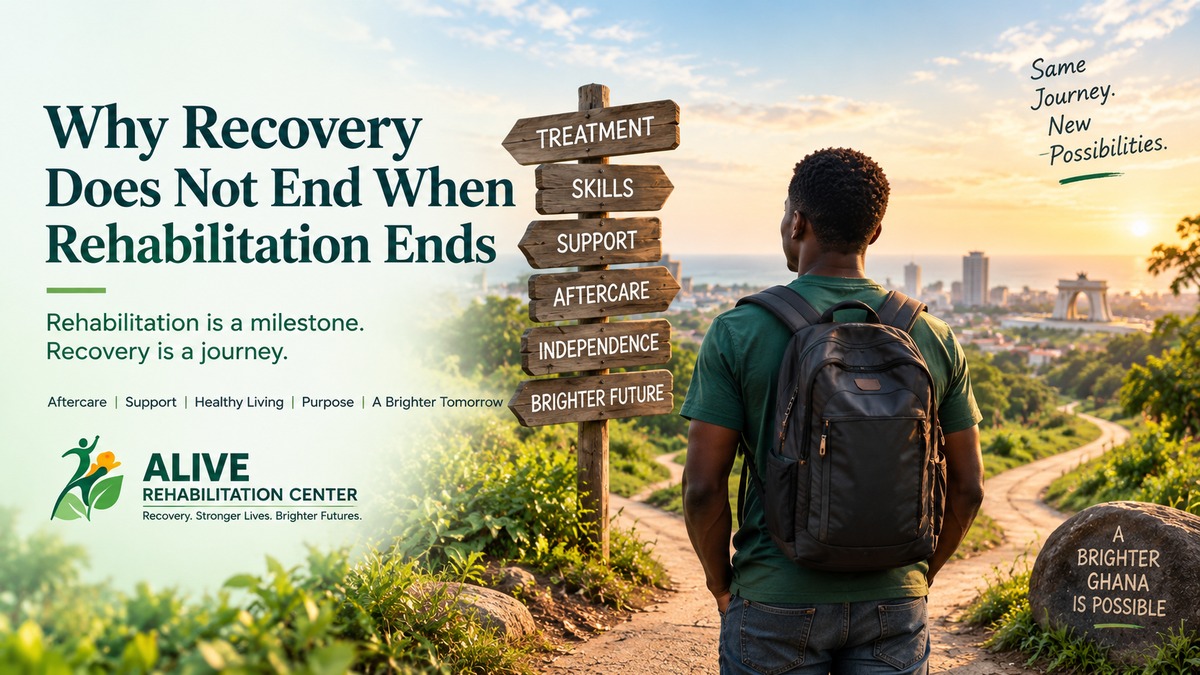
Why Recovery Does Not End When Rehabilitation Ends
By Zida Alive
Completing rehabilitation is a major milestone, but long-term recovery depends on continued action, relapse prevention, support and building a healthier life after discharge.
Completing a rehabilitation programme is an important achievement, but it should not be viewed as the end of recovery.
For many people, it is the beginning of a new stage of life.
During rehabilitation, individuals may live within a structured environment where routines, counselling, therapy, peer support and professional supervision help them develop stability. Returning to everyday life means putting those skills into practice in a less controlled environment.
The Transition Can Be Challenging
After discharge, a person may encounter many of the circumstances associated with their previous substance use.
These may include:
- Old friends and social circles
- Familiar places associated with drug use
- Stress at work or home
- Financial difficulties
- Loneliness
- Emotional distress
- Relationship problems
- Overconfidence about recovery
Being prepared for these challenges is an important part of relapse prevention.
Recovery Requires Continued Action
Long-term recovery may include continued counselling, support groups, healthy relationships, meaningful work, spiritual or personal development and regular reflection on one's recovery.
The exact recovery pathway differs from person to person.
What matters is that the individual continues to practise the principles and coping skills developed during treatment.
Relapse Prevention
A relapse-prevention plan can help identify personal triggers and warning signs before they develop into a full return to substance use.
Individuals can learn to recognise:
- Emotional warning signs — irritability, isolation, anxiety or frustration.
- Behavioural warning signs — abandoning routines, missing appointments or reconnecting with risky peers.
- Thought patterns — romanticising previous substance use or believing that controlled use is possible.
Recognising these signs early creates an opportunity to seek help.
Recovery Is About Building a New Life
Long-term recovery is not simply about avoiding drugs and alcohol.
It is about developing a life in which substance use is no longer necessary to cope with everyday challenges.
This can involve rebuilding relationships, developing healthy interests, finding meaningful work, improving physical wellbeing and developing emotional resilience.
Our Approach at Alive Rehabilitation Center
At Alive Rehabilitation Center, we recognise that recovery extends beyond the initial period of rehabilitation.
Our programme focuses on helping individuals develop the skills, understanding and support systems needed to continue their recovery after treatment.
We encourage clients and families to view discharge not as the end of treatment, but as an important transition into the next stage of recovery.
Recovery is a journey. The work continues long after discharge from rehabilitation.
Health Information Notice
This article is provided for general education and does not replace individual medical, psychiatric or emergency assessment. If someone is in immediate danger or experiencing a medical emergency, seek urgent professional care.
Need guidance or support?
Alive Rehabilitation Center can provide information about rehabilitation, admissions, professional referrals and recovery support.